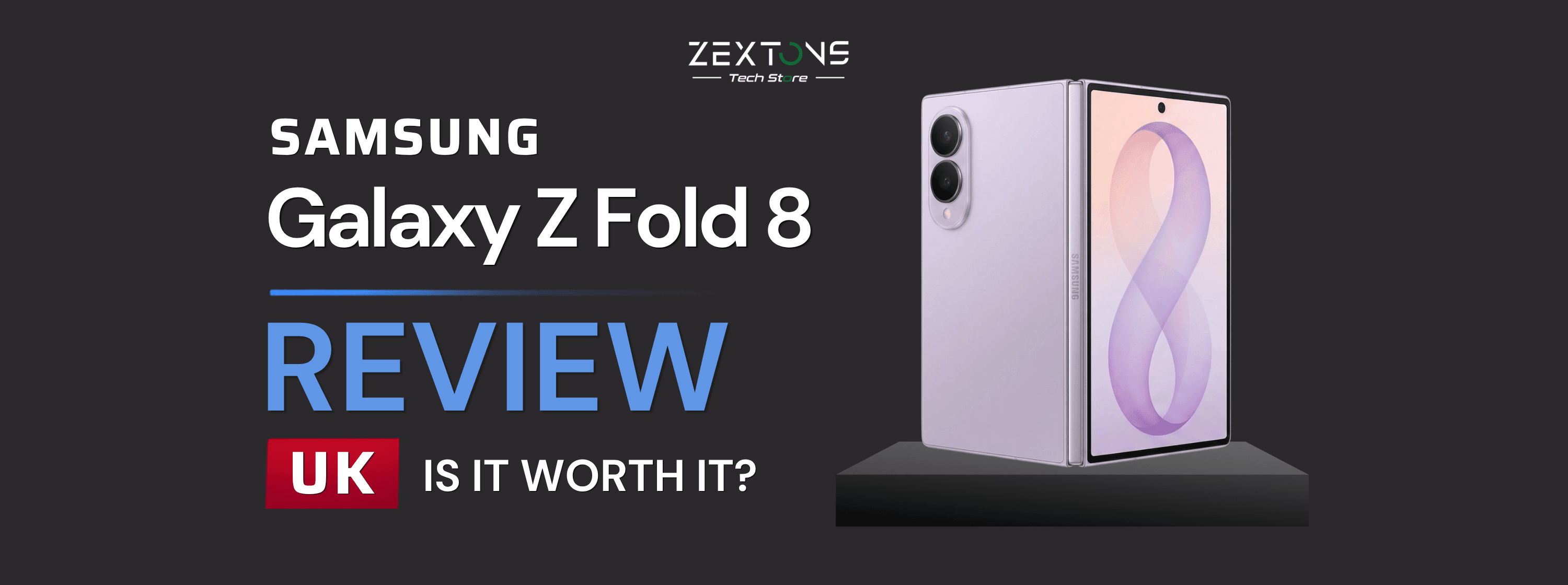
Tech Review & UK Buyer’s Guide
Samsung Galaxy Z Fold 8 Review: Brilliant, but Is It Worth £1,699?
Samsung’s passport-style foldable pairs a compact 5.5-inch cover screen with a 7.6-inch mini tablet. We examine whether that transformation justifies the flagship price.
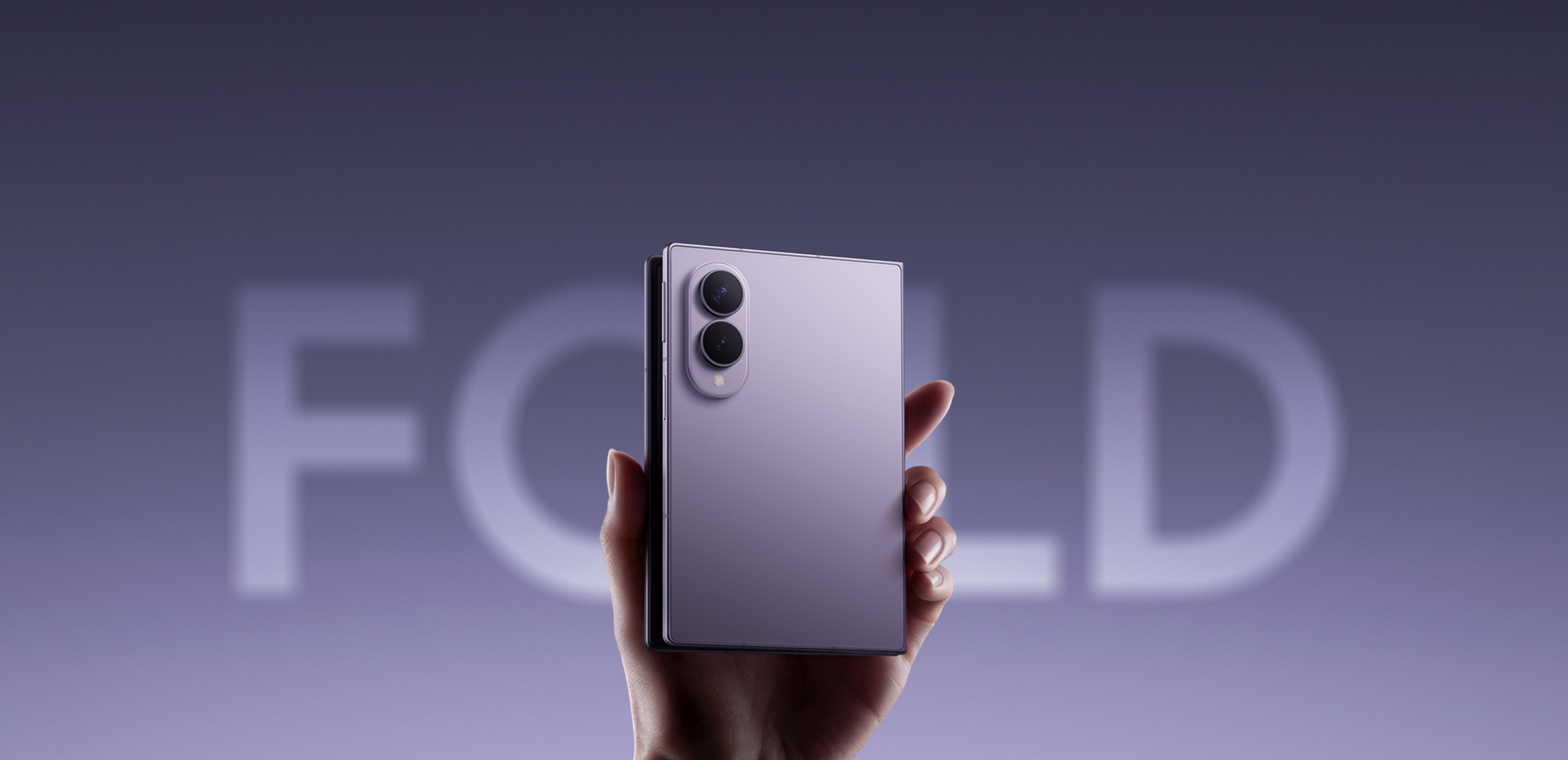
The Samsung Galaxy Z Fold8 solves one of the biggest problems with book-style foldables: they can feel too large even before you open them. Samsung’s new passport-style design is short, wide and surprisingly light, yet it still unfolds into a 7.6-inch mini tablet.
That combination makes the Fold8 one of the most interesting Samsung phones of 2026. However, it starts at £1,699, has no dedicated telephoto camera, does not support the S Pen and carries only an IP48 rating.
So, is the Samsung Galaxy Z Fold8 worth buying in the UK? For most people, a conventional flagship offers better value. Nevertheless, buyers who genuinely want a compact phone and a tablet in one device may find that the Fold8’s unusual form factor justifies its compromises.
Samsung Galaxy Z Fold8 Review: Quick Verdict
The Samsung Galaxy Z Fold8 is a fast, beautifully engineered foldable with an excellent compact-to-tablet design, bright 120Hz AMOLED displays and useful multitasking software. Its 201g body and 4,800mAh battery also make it more practical than its dimensions suggest.
However, £1,699 is a substantial price for a phone without a telephoto lens, S Pen input or fine-dust protection. The Fold8 is therefore best for productivity-focused early adopters who value its passport-style shape above camera versatility and conventional flagship value.
Zextons verdict: 8.5/10
Best for: Buyers who want a pocketable phone that opens into a small tablet.
Consider an alternative if: Camera zoom, ruggedness, stylus support or value for money matters more than the folding design.
Samsung Galaxy Z Fold8 Pros and Cons
| Pros | Cons |
|---|---|
| Compact passport-style design | High £1,699 starting price |
| Bright 120Hz AMOLED displays | No dedicated telephoto camera |
| Upgraded 4,800mAh battery | No S Pen support |
| Lightweight 201g construction | IP48 lacks fine-dust protection |
| Useful 4:3 tablet display | Traditional Flex Mode is unavailable |
| Flagship Snapdragon performance | Folding display requires extra care |
How We Researched This Samsung Galaxy Z Fold8 Review
To create this complete UK buyer’s guide, Zextons synthesised official Samsung specifications, published lab metrics, current UK pricing and independent hands-on assessments from established mobile technology reviewers.
We also compared findings across sources, including Mark Ellis Reviews, Uswitch and 91mobiles. This was particularly useful where reviewers differed on one-handed usability, application optimisation, camera performance and battery endurance.
This evidence-led approach combines verified product information with practical ownership considerations, helping UK buyers make a more informed decision. Specifications, software features and prices can change, so check the retailer and manufacturer before ordering.
Information and pricing last checked: 31 August 2026.
Samsung Galaxy Z Fold8 UK Specifications
- UK release date: 7 August 2026
- Starting price: £1,699
- Cover display: 5.5-inch Dynamic AMOLED 2X, 1–120Hz, 1,248 × 1,972
- Main display: 7.6-inch Dynamic AMOLED 2X, 1–120Hz, 1,848 × 2,448
- Peak brightness: Up to 3,000 nits
- Processor: Snapdragon 8 Elite Gen 5 for Galaxy
- Memory and storage: 12GB/256GB, 12GB/512GB or 16GB/1TB
- Rear cameras: 50MP wide and 50MP ultra-wide
- Front cameras: 10MP cover camera and 10MP inner camera
- Battery: 4,800mAh
- Charging: 45W wired, 20W wireless and Wireless PowerShare
- Weight: 201g
- Thickness: 9.7mm folded and 4.5mm unfolded
- Water and dust rating: IP48
- Software: Android 17 with One UI 9
- Colours: Graphite, Cream and Lavender; Pistachio is a Samsung-exclusive finish
What Is the Samsung Galaxy Z Fold8?
The Galaxy Z Fold8 is Samsung’s compact passport-style book foldable. When closed, it offers a 5.5-inch cover screen for messages, calls and quick tasks. Open the device and it becomes a 7.6-inch 4:3 tablet for reading, video, multitasking, gaming and productivity.
This distinction matters. The standard Fold8 is not simply a routine replacement for the Galaxy Z Fold7. Instead, Samsung has split the range: the Fold8 introduces the shorter, wider form factor, while the Fold8 Ultra continues the larger, more traditional Fold experience.
In other words, the regular Fold8 prioritises portability. The Ultra prioritises screen size and camera hardware.
Samsung Galaxy Z Fold8 Passport Design and Build Quality
Design is the Fold8’s clearest advantage. At 81.9mm wide and 123.9mm tall when folded, it feels more like a passport or a compact notebook than a conventional tall smartphone. The 10:16 cover-screen ratio looks unusual at first, but it creates a short device that can sit more comfortably in a pocket.
The phone weighs 201g and measures 9.7mm when closed. That is a major achievement for a device containing two screens, a hinge and a 4,800mAh battery. When opened, each side is only 4.5mm thick, which helps the Fold8 feel futuristic rather than cumbersome.
Its wider body will not suit every hand. Some users may find the cover screen easy to reach because the phone is short, while others may struggle to span its width one-handed. Therefore, the best description is compact rather than universally one-hand friendly.
Samsung uses its Armor FlexHinge for the folding mechanism, while the Flex Titanium Plate sits beneath the main display to strengthen its structure. The distinction is worth noting because the Flex Titanium component is not the hinge itself.
The hinge feels central to the experience. Published hands-on reviews broadly describe it as smooth and reassuring, although the Fold8 does not hold the same range of half-open positions associated with Samsung’s traditional Flex Mode. Closing the phone also protects the softer inner panel, but owners should still check that grit is not trapped between the two halves.
One smaller annoyance is the raised dual-camera housing. It can make the device wobble when used on a desk, particularly while folded. A protective case may reduce the movement, although it will add thickness.
Samsung Galaxy Z Fold8 Display Review
Both Galaxy Z Fold8 screens use Dynamic AMOLED 2X panels with adaptive 1–120Hz refresh rates and peak brightness of up to 3,000 nits. As a result, scrolling looks fluid, colours appear vivid and outdoor visibility should remain strong in most conditions.
5.5-Inch AMOLED Cover Display
The 5.5-inch cover display has a 1,248 × 1,972 resolution and a 10:16 aspect ratio. It is designed for quick interactions rather than maximum immersion. Messaging, email, music controls, maps and calls fit naturally, although some websites and applications may feel compressed by the unusual shape.
The cover screen is particularly useful when standing, commuting or holding something in the other hand. More demanding tasks, however, make more sense on the inner display. That division of labour is the Fold8’s core idea: use the small screen when speed matters and unfold the phone when space matters.
7.6-Inch 4:3 Folding Display
Open the device and the 7.6-inch screen offers a 1,848 × 2,448 resolution with a tablet-like 4:3 ratio. This shape is well suited to ebooks, documents, web pages, spreadsheets, photographs and side-by-side applications.
It also works well for video compared with squarer foldable screens, because widescreen content produces less severe letterboxing. Black bars do not disappear completely, but the usable picture can feel more natural than on an almost square panel.
Samsung’s split keyboard helps with typing because the keys sit closer to each thumb. Alternatively, the wide canvas can display a full keyboard when the phone rests on a surface. App behaviour still varies, though. Well-optimised applications make excellent use of the space, while others simply stretch a phone layout or leave unused areas.
Galaxy Z Fold8 Crease, Brightness and Reflections
The centre crease has become less distracting on recent foldables, and hands-on reports suggest it is difficult to notice when viewing the Fold8 directly. It remains possible to feel under a finger and may become more visible under strong side lighting.
The inner screen also has a softer, more plastic-like surface than ordinary cover glass. That is an unavoidable consequence of a flexible display. Users should not remove the factory-applied protector, press the panel with sharp objects or close the phone around debris.
Samsung Galaxy Z Fold8 Performance and Gaming
The Snapdragon 8 Elite Gen 5 for Galaxy gives the Fold8 flagship-level processing power. Everyday navigation, multitasking, image editing and demanding games should all feel fast, supported by either 12GB or 16GB of RAM.
The 256GB and 512GB versions include 12GB of RAM, whereas the 1TB model increases memory to 16GB. None includes a microSD card slot, so buyers should choose enough storage at the time of purchase.
For most people, 256GB provides the best balance of price and capacity. The 512GB model makes more sense for frequent 4K or 8K video recording, large offline media libraries and games. Meanwhile, 1TB is primarily for power users who plan to keep the device for several years.
Sustained gaming and intensive AI tasks can produce heat, as they can on other thin flagship phones. The Fold8’s large internal surface may help distribute that warmth, but the extremely slim unfolded chassis leaves limited space for cooling. Performance remains a strength; thermal comfort during long sessions is the more relevant consideration.
One UI 9 Multitasking and Samsung DeX
The Galaxy Z Fold8 ships with Android 17 and Samsung One UI 9. Samsung’s foldable software remains one of the strongest reasons to choose a Galaxy Z device because it treats the large display as a workspace rather than merely an enlarged phone screen.
Users can run multiple applications at once, drag content between compatible apps and keep favourite app combinations accessible from the taskbar. Three-app layouts plus a floating window are possible, although a simpler two-app split will be more practical for most tasks.
Samsung DeX adds a desktop-style interface when connected to a compatible external display. That can turn the Fold8 into a light workstation for email, documents, presentations and remote access. It will not replace a laptop for every professional, but it adds real value beyond the folding hardware.
Samsung also promises up to seven generations of operating-system upgrades and seven years of security updates. That long support window is important on a £1,699 phone, although physical battery and screen condition will still affect how long the device remains practical.
Galaxy AI Features on the Samsung Fold8
The large inner display gives Galaxy AI tools more room to show source material and results together. Features include Photo Assist for generative image edits, Gemini Notebook integration and contextual tools such as Now Nudge. My FanCam can also help capture selected moments at events.
Some features require a Samsung or Google account, and availability can vary by language, region and application. Samsung also includes a six-month Google AI Pro offer for eligible customers, subject to the current promotional terms.
AI is useful here, but it should not be the only reason to buy the Fold8. Several tools are available on other Galaxy phones, while cloud-based features, pricing and availability can change. The stronger benefit is how the foldable screen presents AI-assisted work alongside the original content.
Does the Galaxy Z Fold8 Support S Pen and Flex Mode?
No. The standard Samsung Galaxy Z Fold8 does not support the S Pen, and it does not provide the traditional multi-angle Flex Mode experience found on some other Galaxy foldables.
Those omissions may disappoint buyers who associate a large Samsung screen with handwriting, illustration or a laptop-like half-folded position. Anyone who needs a stylus should consider a compatible Galaxy Ultra device instead. Buyers who regularly use Flex Mode should compare the Fold8 Ultra before ordering.
Removing these features helps Samsung deliver the Fold8’s slim, compact construction. Even so, they remain meaningful compromises at this price.
Samsung Galaxy Z Fold8 Camera Review
The Fold8 has two rear cameras: a 50MP main camera with an f/1.8 aperture and optical image stabilisation, plus a 50MP ultra-wide camera with an f/1.9 aperture. A 10MP selfie camera appears on each display.
The main and ultra-wide cameras should capture detailed, colourful images in good light, while the main sensor benefits from optical stabilisation in darker scenes. Samsung’s processing typically favours bright, social-media-ready colour. Some buyers will enjoy that look, whereas others may prefer a more neutral image.
The dual 50MP arrangement is capable, but it is not Samsung’s most versatile camera system. The Fold8 Ultra and Galaxy S26 Ultra offer more ambitious hardware, particularly for zoom. Therefore, the regular Fold8’s cameras are good enough for everyday photography but not a reason to choose it over Samsung’s best camera phone.
Is the Missing Telephoto Camera a Problem?
The Fold8 does not have a dedicated telephoto camera. Samsung offers up to 2x optical-quality zoom by cropping the high-resolution main sensor, followed by digital zoom up to 10x.
The 2x option should work well for portraits, food and nearby subjects in good light. However, distant wildlife, concerts, travel details and sports will expose the absence of a true telephoto lens. Digital zoom cannot reproduce the same detail or perspective as dedicated optical hardware.
For casual users, this may be acceptable. For keen mobile photographers, it is the biggest camera compromise—especially on a phone costing £1,699.
Galaxy Z Fold8 Video Recording and Vlogging Features
The rear cameras can record up to 8K at 30 frames per second, although 4K is more practical for most people because it uses less storage and is easier to edit and share.
The folding design creates one valuable advantage for creators: users can preview themselves on the cover display while recording with the higher-quality rear cameras. This rear-camera preview makes the Fold8 a compelling vlogging device, even though its missing telephoto lens limits long-range flexibility.
The inner and cover selfie cameras remain convenient for video calls. Nevertheless, the main rear camera will deliver the strongest image quality when the preview feature is practical.
Samsung Galaxy Z Fold8 Battery Life and Charging
Samsung has increased battery capacity to 4,800mAh. The company rates the Fold8 for up to 26 hours of video playback, while independent hands-on reports generally describe it as capable of lasting a full day under moderate use.
Actual endurance depends heavily on how the phone is used. Spending most of the day on the 5.5-inch cover screen should consume less power than gaming, multitasking or streaming on the 7.6-inch inner display. Signal strength, brightness, camera use and background AI features also affect the result.
The Fold8 supports 45W wired charging. Samsung says a compatible 45W adapter and 3A cable can restore up to 63% in around 30 minutes under its test conditions. The charger is sold separately, so buyers should include that cost if they do not already own a suitable USB-C power adapter.
There is also 20W wireless charging and Wireless PowerShare for compatible earbuds and accessories. However, the phone’s short body and camera housing may make alignment awkward on some car charging pads. Wired charging is likely to be the more reliable option while travelling.
Samsung Galaxy Z Fold8 Durability and IP48 Protection
The Galaxy Z Fold8 carries an IP48 rating. The “8” means Samsung tested it in fresh water at up to 1.5 metres for as long as 30 minutes under laboratory conditions. Water resistance can reduce over time and does not cover every liquid, so the phone should not be treated as waterproof.
The “4” protects against solid objects larger than 1mm. Crucially, it does not certify the Fold8 against fine dust or sand. That makes beaches, workshops and dusty outdoor environments a greater concern than they would be for a conventional IP68 flagship.
Durability is not only about the rating. The flexible inner display is softer than standard smartphone glass, while the hinge contains moving parts. Samsung’s engineering has improved significantly, but owners still need to use more care than they would with a slab phone.
A good case, sensible handling and appropriate insurance are worth considering. Prospective buyers should also check the current Samsung warranty terms and any retailer cover before purchase, because accidental damage is normally treated differently from a manufacturing fault.
Samsung Galaxy Z Fold8 vs Fold8 Ultra
Choose the standard Galaxy Z Fold8 if portability, lower weight and its short passport-style shape are the priorities. It is also £200 less expensive at entry level, based on Samsung’s launch pricing.
Choose the Galaxy Z Fold8 Ultra if you want the larger traditional Fold format, a 200MP main camera, a dedicated 3x telephoto camera and greater support for half-folded use. Its larger, more conventional screen shape may also suit users who want the closest possible substitute for a small tablet.
The Ultra is the more complete specification sheet. However, the regular Fold8 has the more distinctive purpose. Paying extra only makes sense if the Ultra’s camera and form-factor benefits matter to you.
Samsung Galaxy Z Fold8 vs Fold7
The Fold8 and Fold7 follow different design philosophies. The Fold7 has a taller phone-like cover screen and a larger, squarer inner canvas. By comparison, the Fold8 is shorter and wider when closed, then opens into a 4:3 display that can suit reading and video more naturally.
The Fold8 also brings a larger 4,800mAh battery and the newer Snapdragon 8 Elite Gen 5 for Galaxy processor. However, its compact proportions may not feel like a direct upgrade for buyers who enjoy the Fold7’s taller screen.
Existing Fold7 owners should upgrade only if the passport-style design solves a real usability problem. Otherwise, the generational performance improvement alone is unlikely to justify another premium purchase.
Samsung Galaxy Z Fold8 vs Galaxy S26 Ultra
The Galaxy S26 Ultra is the more rational purchase for most flagship buyers. It costs less at launch, offers stronger zoom hardware, supports the S Pen and carries a conventional IP68 rating. Its solid glass display is also easier to own without worrying about a folding panel or hinge.
The Fold8 wins in one transformative area: screen flexibility. It gives users a compact cover display for quick tasks and a tablet-sized canvas when needed. No conventional phone, including the S26 Ultra, can reproduce that combination.
Therefore, choose the S26 Ultra for cameras, stylus use, durability and value. Choose the Fold8 only if its two-in-one form factor will materially improve how you read, watch, work or multitask.
Samsung Galaxy Z Fold8 UK Price and Storage Options
Samsung launched the Galaxy Z Fold8 in the UK on 7 August 2026 with three configurations:
- 256GB storage and 12GB RAM: £1,699
- 512GB storage and 12GB RAM: £1,869
- 1TB storage and 16GB RAM: £2,209
The 256GB version is the sensible choice for most buyers. The £170 increase to 512GB is easier to justify than the jump to the 1TB model, particularly because cloud storage can cover photographs and documents. However, applications and offline video still occupy local space.
Before buying, compare the total cost rather than only the monthly payment. Include any charger, case, insurance and storage upgrade. Trade-in promotions can make the Fold8 more appealing, but their value depends on the device being exchanged and its condition.
Who Should Buy the Samsung Galaxy Z Fold8?
The Fold8 makes sense for:
- Buyers who want a genuinely compact phone that becomes a mini tablet
- Frequent readers, travellers and commuters
- Professionals who use split-screen apps, email, documents or Samsung DeX
- Content creators who value rear-camera selfie preview
- Early adopters comfortable paying more for a distinctive form factor
- Long-term users who value seven years of software support
The strongest reason to buy is not raw performance or camera quality. It is the ability to choose between a small screen and a large one without carrying two devices.
Who Should Avoid the Samsung Galaxy Z Fold8?
Consider another phone if:
- You want the best camera zoom available for the money
- You need an S Pen for notes, drawing or precise editing
- You work around sand, grit or fine dust
- You prefer a rugged phone that requires less careful handling
- You expect every application to make perfect use of the unusual displays
- You mainly want flagship speed and do not need a folding screen
- Spending £1,699 would require uncomfortable financial compromise
For these buyers, the Galaxy S26 Ultra or a discounted previous-generation flagship is likely to offer better value. A professionally refurbished Samsung phone can reduce the cost further while still providing strong everyday performance.
Why Buy a Samsung Phone from Zextons?
Zextons Tech Store helps UK customers compare new and refurbished Samsung phones without unnecessary jargon. Clear product grading, condition information and warranty details make it easier to understand what you are buying before checkout.
Our Samsung range also gives shoppers a useful way to compare premium foldables with conventional Galaxy flagships. Stock, colours, storage capacities and prices can change, so check the relevant product page for the latest availability and terms.
You can also read our Samsung Galaxy Z Flip8 review if you prefer a smaller clamshell foldable.
Is the Samsung Galaxy Z Fold8 Worth Buying?
The Samsung Galaxy Z Fold8 is worth buying for a narrow but genuine audience. Its 201g passport-style design succeeds where many book foldables struggle: it feels compact when closed yet still provides a useful 7.6-inch tablet display when opened.
It is fast, bright, versatile and supported for years. The larger 4,800mAh battery also improves its practicality, while One UI 9, multitasking and DeX turn the inner screen into more than a novelty.
Nevertheless, the price is difficult to ignore. At £1,699, buyers must accept no dedicated telephoto camera, no S Pen, no traditional Flex Mode and no certified protection against fine dust. A Galaxy S26 Ultra is the safer all-round purchase for most people.
Final verdict: Buy the Galaxy Z Fold8 if its compact-phone-to-mini-tablet transformation is the feature you will use every day. Otherwise, save money and choose a conventional Samsung flagship with better cameras and fewer durability concerns.
Samsung Galaxy Z Fold8 FAQs
Is the Samsung Galaxy Z Fold8 worth buying in the UK?
Yes, but only for buyers who place a high value on its compact passport-style design and 7.6-inch folding display. Most users will get better cameras, durability and value from a conventional flagship such as the Galaxy S26 Ultra.
How much does the Samsung Galaxy Z Fold8 cost in the UK?
The Galaxy Z Fold8 starts at £1,699 for 256GB. The 512GB version costs £1,869, while the 1TB model with 16GB of RAM costs £2,209 at Samsung’s UK launch prices.
What size are the Galaxy Z Fold8 displays?
It has a 5.5-inch 120Hz AMOLED cover display and a 7.6-inch 120Hz AMOLED folding display. The inner screen uses a 4:3 aspect ratio suited to reading, video and multitasking.
Does the Samsung Galaxy Z Fold8 support the S Pen?
No. The standard Galaxy Z Fold8 does not support S Pen input. Buyers who need handwriting or drawing tools should consider a compatible Galaxy Ultra device.
Does the Galaxy Z Fold8 have a telephoto camera?
No. It has 50MP wide and 50MP ultra-wide rear cameras but no dedicated telephoto lens. It offers 2x optical-quality zoom from the main sensor and digital zoom up to 10x.
How long does the Galaxy Z Fold8 battery last?
The 4,800mAh battery should provide a full day of moderate use for many users, although frequent use of the large inner display will reduce endurance. Samsung rates the phone for up to 26 hours of video playback under its test conditions.
How fast does the Galaxy Z Fold8 charge?
It supports 45W wired and 20W wireless charging. Samsung says a compatible 45W charger and 3A cable can reach up to 63% in about 30 minutes. The power adapter is sold separately.
Is the Samsung Galaxy Z Fold8 waterproof and dustproof?
The Fold8 is water-resistant rather than waterproof. Its IP48 rating covers laboratory immersion in fresh water and objects larger than 1mm, but it does not certify the phone against fine dust or sand.
Does the Galaxy Z Fold8 have Flex Mode?
The standard Fold8 does not offer the traditional multi-angle Flex Mode experience. Buyers who rely on half-folded use should compare it with the Fold8 Ultra before purchasing.
What is the difference between the Galaxy Z Fold8 and Fold8 Ultra?
The regular Fold8 is smaller, lighter and uses a passport-style shape. The Fold8 Ultra is larger and adds stronger camera hardware, including a 200MP main camera and dedicated 3x telephoto lens, but it costs more.
Compare before you buy
Find the right Samsung Galaxy for you
Explore new and refurbished Samsung phones, compare storage options and check the latest UK availability at Zextons.