
Zextons buying guide · UK comparison
The upgrade. Or the saving.
iPhone 18 Pro Max vs iPhone 17 Pro Max: we compare the camera, battery, performance and real UK prices, so you can decide whether the newer model is worth the extra money.
Variable main-camera aperture on the 18 (17: fixed ƒ/1.78)
Up to 40% faster GPU, per Apple, plus better sustained performance
Rated video playback: 43 hours vs 37 hours (UK models)
To 50% wired with a compatible adapter (17: about 20 min)
See the difference
A familiar look. Different reasons to buy.
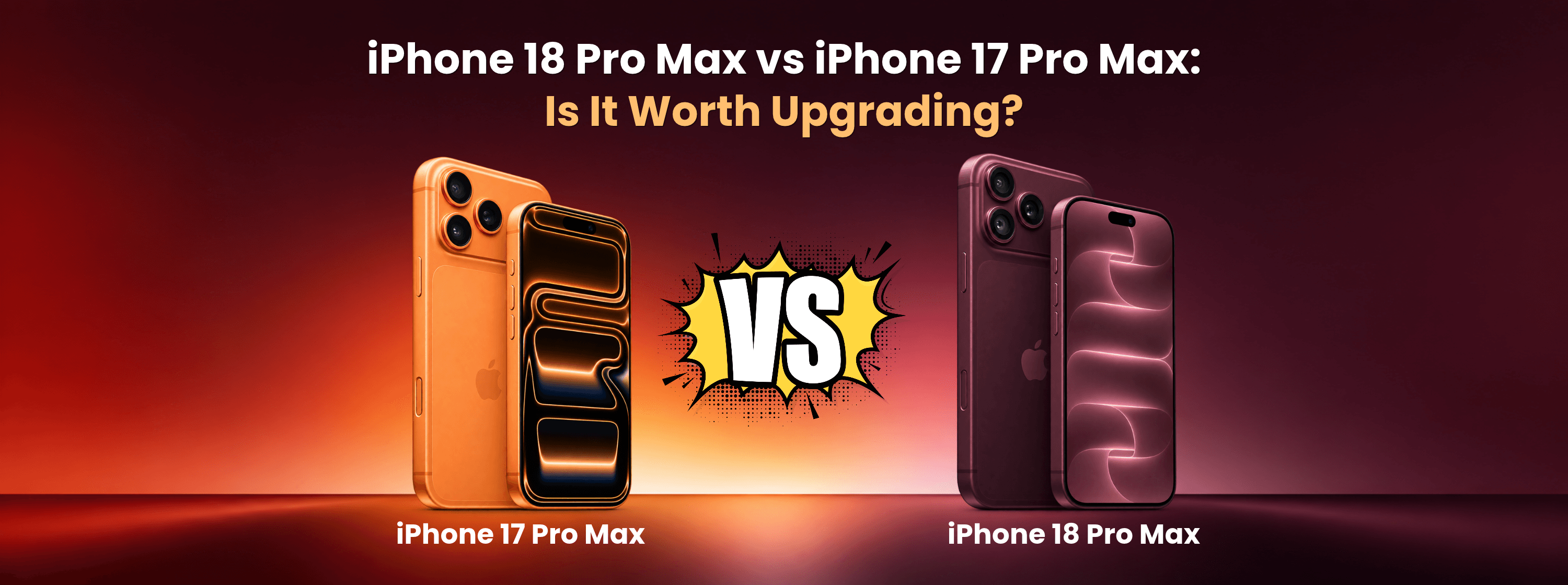
Official Apple imagery, with the Pro Max differences labelled below each generation.
iPhone 18 Pro Max
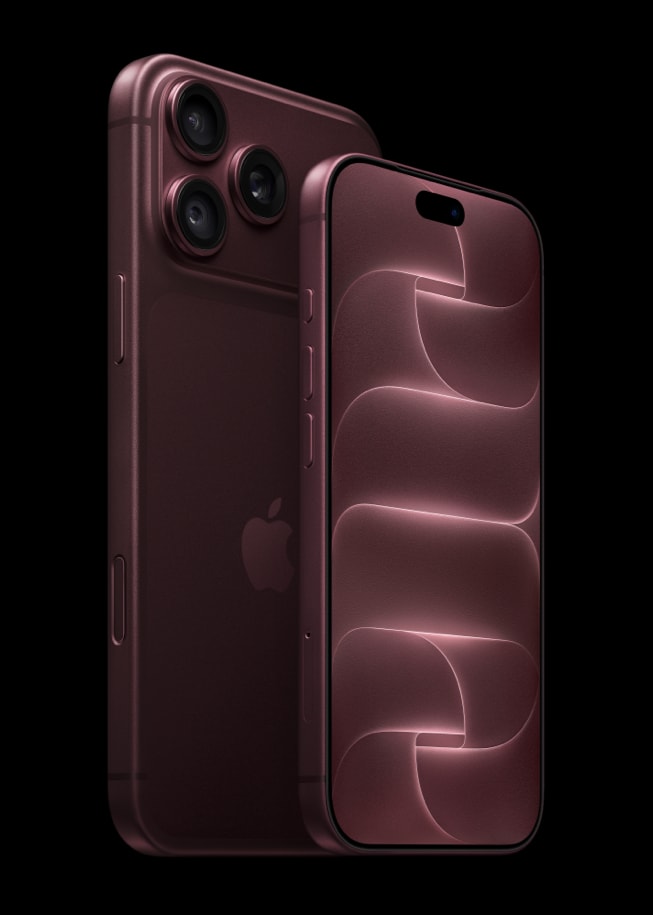
- Main-camera aperture
- Variable: ƒ/1.48 to ƒ/4
- Chip
- A20 Pro
- UK video-playback rating
- Up to 43 hours
- UK specification weight
- 249g
Image: Apple. Includes Pro and Pro Max models. View image source
iPhone 17 Pro Max

- Main-camera aperture
- Fixed: ƒ/1.78
- Chip
- A19 Pro
- UK video-playback rating
- Up to 37 hours
- UK specification weight
- 231g
£1,049.99Refurbished · Excellent
256GB · in stock at check
Image: Apple. Pro-generation promotional image. View image source
Images are shown for design reference, not at matching physical scale. Key figures refer to the UK Pro Max models; detailed sources appear in the specification and battery sections.
Choose the newer model
iPhone 18 Pro Max
For additional main-camera control and demanding creative workloads.
Consider the saving
iPhone 17 Pro Max
For the large Pro Max experience at a worthwhile lower price.
Already own the 17?
Keep it if it fits
Upgrade when a specific improvement solves a limitation you notice.
The short answer
Choose the iPhone 18 Pro Max for extra camera control, stronger sustained performance and quicker wired top-ups. Choose a suitably priced iPhone 17 Pro Max if its large display, broad camera coverage and shared everyday features already meet your needs. Existing 17 Pro Max owners have less reason to change than buyers moving from an older phone.
This iPhone 18 Pro Max vs iPhone 17 Pro Max comparison uses UK specifications and listings checked on 11 November 2026. It is a researched editorial assessment, not a hands-on test conducted by Zextons.
If price is your starting point, check the available refurbished iPhone 17 Pro Max configurations while comparing the differences below.
iPhone 18 Pro Max vs iPhone 17 Pro Max: Specifications Compared
The important changes are the main camera’s aperture control, processor, sustained performance and charging. Display size, core connectivity and several camera capabilities remain similar, so the newer generation is not automatically the better purchase for every budget.
| Specification | iPhone 18 Pro Max | iPhone 17 Pro Max |
|---|---|---|
| Display | 6.9-inch OLED | 6.9-inch OLED |
| Resolution | 2868 × 1320, 460ppi | 2868 × 1320, 460ppi |
| Refresh rate | ProMotion, up to 120Hz | ProMotion, up to 120Hz |
| Brightness: typical / HDR / outdoor peak | 1,000 / 1,600 / 3,000 nits | 1,000 / 1,600 / 3,000 nits |
| Display features | Always-On, anti-reflective coating | Always-On, anti-reflective coating |
| Processor | A20 Pro | A19 Pro |
| CPU / GPU | 6-core / 7-core | 6-core / 6-core |
| Neural Engine | Dual 16-core | 16-core |
| Storage options | 256GB, 512GB, 1TB, 2TB | 256GB, 512GB, 1TB, 2TB |
| Dimensions | 163.4 × 78 × 8.75mm | 163.4 × 78 × 8.75mm |
| UK specification weight | 249g | 231g |
| Construction | Aluminium; Ceramic Shield 2 front | Aluminium; Ceramic Shield 2 front |
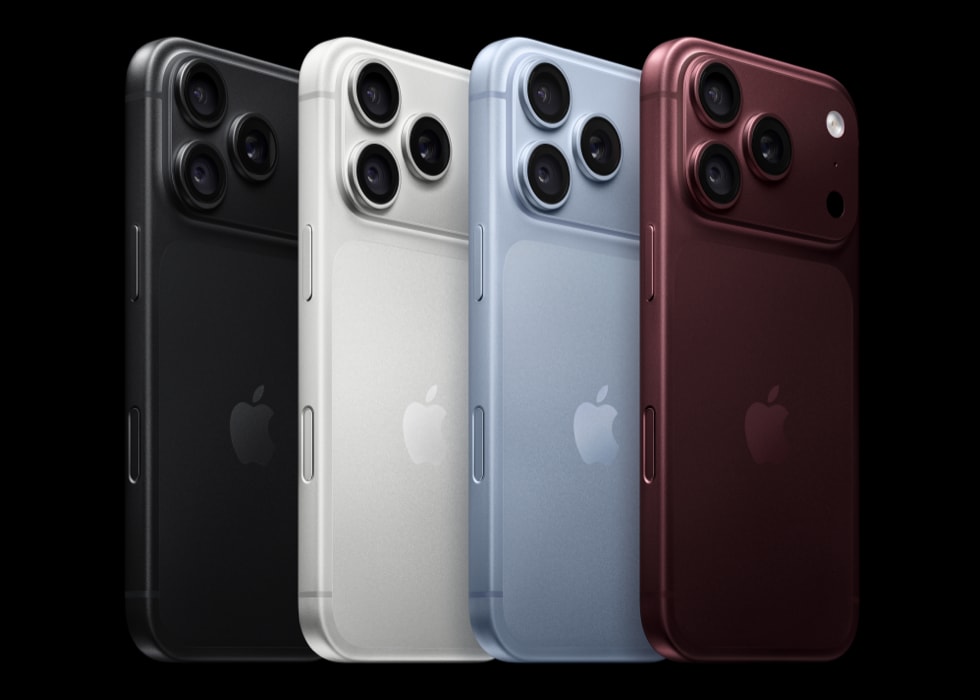
| Colours | Black, Silver, Glacier, Burgundy | Silver, Cosmic Orange, Deep Blue |
| Water-resistance rating | IP68 | IP68 |
| Wireless connectivity | 5G, Wi-Fi 7, Bluetooth 6 | 5G, Wi-Fi 7, Bluetooth 6 |
| UK SIM support | Nano-SIM and eSIM; dual eSIM | Nano-SIM and eSIM; dual eSIM |
| Connector | USB-C; USB 3 up to 10Gb/s | USB-C; USB 3 up to 10Gb/s |
| Authentication | Face ID | Face ID |
Specifications: Apple UK iPhone 18 Pro Max and Apple UK iPhone 17 Pro Max. These are UK figures; imported variants and available seller configurations can differ.
UK Prices: How Much Extra Does the iPhone 18 Pro Max Cost?
Apple’s UK launch price for the 18 Pro Max 256GB was £1,299. Zextons listed an Excellent-condition refurbished 17 Pro Max 256GB in Deep Blue at £1,049.99 and marked it in stock when checked on 11 November 2026.
| Buying option | Price reference | Availability at the check |
|---|---|---|
| iPhone 18 Pro Max 256GB, new | £1,299 Apple UK launch price | Unavailable at Zextons when checked |
| iPhone 17 Pro Max 256GB, refurbished, Excellent, Deep Blue | £1,049.99 Zextons listing | Marked in stock |
The £249.01 gap is a reference comparison between a new phone’s launch price and a refurbished phone’s selling price, not two equivalent current offers. Check the final price and chosen configuration before deciding whether the newer camera and performance features justify the difference.
Buying refurbished. Zextons lists at least 85% battery health, an 18-month warranty and returns subject to its published terms for this model. Cosmetic grade describes appearance, not battery capacity. An Excellent phone need not have a brand-new battery; consider condition and battery health separately. The linked product page shows the available configurations and included accessories.
Choosing storage. Look at how much space you use now. Choose 256GB if you stream most media and regularly manage your library; consider 512GB or more for large games, offline downloads and frequent video recording. ProRes is particularly demanding: Apple says its files can be up to 30 times larger than HEVC. Higher storage makes more sense when it supports an actual recording or offline-use habit, rather than simply matching the newest model.
Sources: Apple UK launch pricing, Zextons 17 Pro Max listing and Apple’s ProRes file guidance. Prices and stock may change.
Camera and Video: What Difference Will You Notice?
The 18 Pro Max gives photographers more control over the main camera. The 17 Pro Max retains much of the same lens coverage and recording capability, so the useful question is which improvements will change the pictures and videos you make.
| Camera feature | iPhone 18 Pro Max | iPhone 17 Pro Max |
|---|---|---|
| Main | 48MP, 24mm; variable ƒ/1.48, ƒ/1.8, ƒ/2.8, ƒ/4 | 48MP, 24mm; fixed ƒ/1.78 |
| Ultra-wide | 48MP, 13mm, ƒ/2.2 | 48MP, 13mm, ƒ/2.2 |
| Telephoto | 48MP, 100mm, 4x, ƒ/2.8 | 48MP, 100mm, 4x, ƒ/2.8 |
| Optical-quality telephoto option | 8x at 12MP | 8x at 12MP |
| Maximum photo digital zoom | 40x | 40x |
| Front camera | 18MP Center Stage, ƒ/1.9, autofocus | 18MP Center Stage, ƒ/1.9, autofocus |
| Main-camera Dolby Vision | Up to 4K 120fps | Up to 4K 120fps |
| Rear Cinematic mode | Up to 4K 60fps | Up to 4K 30fps |
| Professional recording support | ProRes RAW, Apple Log 2, external ProRes recording | ProRes RAW, Apple Log 2, external ProRes recording |
Which lens should you use? The main lens is the starting point for everyday pictures. Choose the ultra-wide for a room, a large group or a landscape; macro is useful for small nearby details. The native 4x telephoto helps frame more distant subjects. The 8x option is optical-quality capture, not a separate native 8x lens, while 40x digital zoom should not be expected to preserve the same detail. More zoom is not a substitute for adequate light or a steady camera.
Wider aperture
Admits more light.
Useful in darker scenes.
Narrower aperture
Greater depth of field.
Useful for groups and scenes.
Conceptual illustration, not a scale drawing of the camera mechanism. Apple’s camera explanation
What changes in the result? The 18’s variable aperture can open wider for light gathering or narrow to increase depth of field. That makes it useful when a group’s faces sit at different distances, rather than only for background blur. It is not a guarantee of sharper children or pets in motion: focus, shutter speed and lighting still matter. For stationary night scenes, keep the phone steady; for moving people, seek better light rather than relying on a long exposure. These are shooting principles, not measured promises for every scene.
What do independent tests show? PhoneArena awarded both models the same overall camera score of 156 in its own assessment, despite a small main-camera photo-score difference. Its result supports a restrained conclusion: additional creative control does not automatically produce a dramatic improvement across every type of photograph. Those scores belong to PhoneArena’s methodology and are not Zextons tests.
Settings without the complexity. Automatic capture is a sensible starting point for everyday users. On the 18 Pro Max, Pro controls add direct aperture, shutter-speed, white-balance and histogram adjustments. Aperture changes light and depth of field; shutter speed affects motion; white balance affects colour; the histogram helps judge exposure. For routine video, 4K at 30fps is a practical starting choice. Try 60fps for smoother motion in good light. Apple’s Auto FPS option can lower frame rate in darker conditions; supported options are under Settings → Camera → Record Video.
Video, selfies and sound. Both offer an 18MP autofocus front camera and Center Stage framing, which matters for group selfies and video calls. Dual Capture records front and rear views for reactions or demonstrations. Action mode prioritises steadier movement; Cinematic mode creates adjustable depth effects. The newer rear Cinematic mode reaches 4K 60fps, compared with 30fps on the 17. Both support advanced ProRes workflows, so professional recording is not exclusive to the 18. External storage and compatible software may be required. For interviews, microphone distance and wind control still deserve attention even with built-in audio processing.
Does using the camera drain more battery? Long recording sessions keep capture, processing and the screen active, so plan more charging time than for occasional photographs. We found no like-for-like camera-recording battery test that establishes a percentage difference between these models. Apple notes that intensive camera use can warm a phone; excessive heat may limit camera functions. For a long shoot, manage brightness, storage and charging breaks, and keep the device out of direct sun. ProRes also raises storage demands; do not select it by default for clips that will only be shared casually.
Our camera verdict. Choose the 18 for deliberate camera control and its specific newer video features. The 17 remains worth considering for family photos, social clips and video calls when the saving is substantial.
Camera hardware: Apple UK specifications above. Explanation: Apple camera overview. Controls and formats: Apple video settings and ProRes recording guide. Independent result: PhoneArena comparison. Heat guidance: Apple temperature support.
Happy with the 17’s camera? Its lenses match the 18 apart from the variable aperture, for about £249 less.
Check the priceBattery Life and Charging: Which Fits Your Routine?
Apple rates the newer UK model higher for video playback, but playback, web browsing and recording video are different workloads. Use a like-for-like test to understand a result instead of treating every battery-hour figure as interchangeable.
| Battery or charging measure | iPhone 18 Pro Max | iPhone 17 Pro Max |
|---|---|---|
| Video playback | Up to 43 hours | Up to 37 hours |
| Streamed video | Up to 38 hours | Up to 33 hours |
| Wired charge to 50% | Around 15 minutes | Around 20 minutes |
| Adapter required for quoted wired result | 60W-capable or higher, supporting AVS | 40W or higher |
| MagSafe / Qi2 maximum | Up to 25W | Up to 25W |
Source: Apple UK technical specifications linked above. Chargers are sold separately; quoted charging results require the specified equipment and conditions.
Up to 6 more hours in Apple’s UK video-playback ratings. These are manufacturer test figures, not mixed-use battery results. 18 Pro Max source · 17 Pro Max source
Measured use, rather than a playback promise. In Tom’s Guide’s continuous 5G browsing test at 150-nit brightness, the 18 Pro Max averaged 18 hours 27 minutes; the 17 Pro Max reached 17 hours 54 minutes. That is a 33-minute improvement in that test. It does not imply six more hours of browsing, gaming or camera use. Regional hardware, battery condition and usage can change results, so these measurements are context rather than a guarantee for a UK refurbished unit.
iPhone 18 Pro Max
15 minTo 50% charge, around.
Compatible 60W-capable AVS adapter required.
iPhone 17 Pro Max
20 minTo 50% charge.
Compatible 40W or higher adapter required.
Your charger and daily routine. A suitable existing USB-C adapter can charge either phone, but the 18’s quoted fastest wired result requires a 60W-capable adapter supporting AVS. Wattage alone does not establish protocol compatibility, and the phone does not draw the adapter’s maximum output continuously. MagSafe is useful for a desk or bedside setup; a compatible wired charger is the more relevant comparison for short top-ups. Charging time to 50% is not a full-charge time.
What affects endurance? Navigation, weak mobile reception, high screen brightness, gaming and camera recording can make your experience very different from a playback test. For refurbished buyers, battery health adds another variable. If your existing 17 Pro Max only disappoints because its battery has aged, compare a battery-service quote with the cost of replacing the whole phone.
Independent measurement: Tom’s Guide battery testing.
Performance and Gaming: Will the Newer Phone Feel Faster?
Everyday speed versus demanding use. Both are premium phones, and calls, messaging and banking are weak reasons on their own to replace a satisfactory 17 Pro Max. The newer chip becomes more relevant when you edit regularly, export large projects or play demanding games for long sessions. Apple claims up to 40% faster GPU performance and improved sustained performance for A20 Pro; this is not a claim that every app opens 40% faster.
What cooling changes. A vapour chamber spreads heat so the processor can sustain performance. Tom’s Guide recorded 79.4% stability for the 18 Pro Max and 65.2% for the 17 Pro Max in the same 3DMark stress test. That supports an advantage under prolonged graphics load, not an exact prediction for frame rates in every game. Neither the score nor the cooling system guarantees a cold phone during gaming, charging or recording.
Our performance verdict. Gamers and people who repeatedly edit or export on their phone have a clearer reason to consider the 18. For a lighter workload, judge the premium against storage, battery condition and how long you intend to keep the device.
Manufacturer claims: Apple’s chip and thermal announcement. Independent stress test: Tom’s Guide performance results.
Display, Design and Handling: What Changes in Daily Use?
Screen experience. Both UK specifications list the same display size, resolution, maximum refresh rate and brightness figures. ProMotion helps scrolling and animations feel smooth; Always-On lets you glance at information; HDR supports compatible video. There is no verified brightness-specification advantage here that justifies calling the newer model automatically easier to read in sunlight. Actual measured brightness can also depend on the test conditions.
Handling and durability. The 18 has a smaller Dynamic Island, but the same stated body dimensions. Its UK listed weight is 18g higher, which may matter more during long calls or one-handed use than a finish change. Both use aluminium and Ceramic Shield protection. IP68 is a laboratory water-resistance rating, not a reason to swim with a phone; wear and repairs can affect protection. A suitable case and screen protector remain sensible, especially when replacement cost matters.
Comfort, audio and accessibility. For reading, navigation or watching videos, think about grip and screen comfort as much as size. Larger text and accessibility settings may help, but try your usual tasks before buying a large device. PhoneArena’s assessment describes speaker quality and haptics as very similar between these two models, so audio alone offers little evidence for paying the newer-phone premium.
Specifications: Apple UK pages above. Dynamic Island: Apple launch information. Audio assessment: PhoneArena review.
Software and Apple Intelligence: Which Differences Are Exclusive?
AI and software. The 18 Pro Max launched with iOS 27, but launch software is not a permanent feature boundary. Apple also lists the 17 Pro Max as supporting Siri AI and its advanced on-device model. Update compatibility, language and regional availability matter more than assuming that every advertised AI capability requires the newest phone. Apple identifies Siri AI as beta software; do not buy solely for a feature that is not available in your setup.
Networks, travel and file transfers. Both support 5G, Wi-Fi 7, Bluetooth 6 and UK nano-SIM/eSIM configurations. That makes either suitable for compatible wireless accessories and a supported travel eSIM, but actual data speed still depends on your network and coverage. The 18 adds Apple’s C2 modem; that does not establish better reception on every route. Both support USB 3 up to 10Gb/s, which matters when moving large video files. A suitable high-speed cable, compatible storage and the destination device are needed; a USB-C connector alone does not guarantee that speed.
Security and ownership. Face ID is the biometric option on both, and neither needs an upgrade simply to gain facial unlocking. For long ownership, prioritise sufficient storage, a healthy battery, warranty cover and repair cost. No guaranteed future software-support end date is assumed here. Imported devices should be checked by model number for SIM and network differences.
Availability: Apple Siri AI information. Connectivity: Apple UK technical specifications and Apple 17 Pro Max connector specifications. Modem: Apple announcement.
Should You Upgrade from the iPhone 17 Pro Max?
An upgrade is easier to justify if photography is a serious interest, a specific recording capability supports your work, or demanding use exposes a limitation you repeatedly notice. If those needs do not apply, the buying case becomes much more dependent on the actual price you must pay.
| Your situation | Our recommendation |
|---|---|
| Current phone meets your needs | Keep it and reassess later |
| You need the newer camera controls | Consider upgrading after checking suitable examples and workflow support |
| Demanding tasks repeatedly limit your work | Compare relevant performance evidence and the upgrade cost |
| Battery deterioration is the main issue | Get a battery-service quote before replacing the whole phone |
Calculate the net upgrade cost using a genuine trade-in quote, any outstanding balance and required accessories. Do not base the decision on an advertised maximum trade-in value that your device may not qualify for.
Which Should You Buy? Our Final Verdict
The 18 Pro Max earns its premium when camera control or sustained workloads matter to you. The 17 Pro Max offers better value when its lower price, chosen condition and battery health meet your needs. Use the table below to match that decision to your priorities.
| Priority | Better starting point |
|---|---|
| More main-camera control | iPhone 18 Pro Max |
| Lower purchase cost | A suitably priced iPhone 17 Pro Max |
| Demanding gaming or creative work | Investigate the 18 Pro Max’s relevant advantages |
| Large display and everyday use | Compare both on price, condition and storage |
| Already owns a satisfactory 17 Pro Max | Keep the existing phone |
For more detail, read our iPhone 18 Pro Max review. To compare available configurations, browse Zextons iPhones or check the refurbished iPhone 17 Pro Max listing for current price, colour and condition options.
Frequently Asked Questions
What Is the Difference Between the iPhone 18 Pro Max and iPhone 17 Pro Max?
The iPhone 18 Pro Max adds a variable-aperture main camera (ƒ/1.48 to ƒ/4), the A20 Pro chip with better sustained performance, longer rated video playback (up to 43 hours vs 37 hours on UK models) and faster wired charging (around 15 minutes to 50% with a compatible adapter). Display size, resolution, dimensions, storage options and connectivity are the same.
Is It Worth Upgrading From the iPhone 17 Pro Max to the iPhone 18 Pro Max?
For most owners of a healthy 17 Pro Max, no. The upgrade makes most sense if you shoot photos or video seriously, play demanding games for long sessions, or regularly edit and export on your phone. If battery wear is the only problem, a battery service usually costs far less than a new phone.
Will an iPhone 17 Pro Max Case Fit the iPhone 18 Pro Max?
Some cases may work, but compatibility depends on the exact accessory. Confirm both models are supported by the case maker. Check camera clearance, buttons, raised protective edges and charging alignment rather than relying only on the phones’ dimensions.
Can You Reuse an iPhone 17 Pro Max Screen Protector?
Check the protector manufacturer’s compatibility information for the exact product. A shared advertised display size does not, by itself, verify edge fit, coverage or compatibility with your case.
Do Both UK Models Support a Physical SIM and eSIM?
Apple’s UK specifications list nano-SIM and eSIM, with dual-eSIM support, for both. Check the individual device’s regional model before buying an imported or refurbished example.
What Should You Check When Buying an Imported Model?
Confirm the model number, SIM configuration, network compatibility, warranty arrangements and seller’s returns terms. Use the specifications for that regional version, particularly when comparing battery claims.
Is the iPhone 17 Pro Max Still Worth Buying?
Yes, when its price and condition suit your needs. It is especially worth considering if you want the large Pro Max experience and will not make regular use of the newer model’s additional camera controls.
Editorial comparison based on Apple UK specifications and Zextons listings checked on 11 November 2026. Manufacturer claims are identified. Prices, availability and feature support may change.
Refurbished iPhone 17 Pro Max£1,049.99 · 256GB Excellent · 18-month warranty
View deal